
GULF OF MANNAR & PALK BAY ECOSYSTEM
Understanding the regional Ecosystem
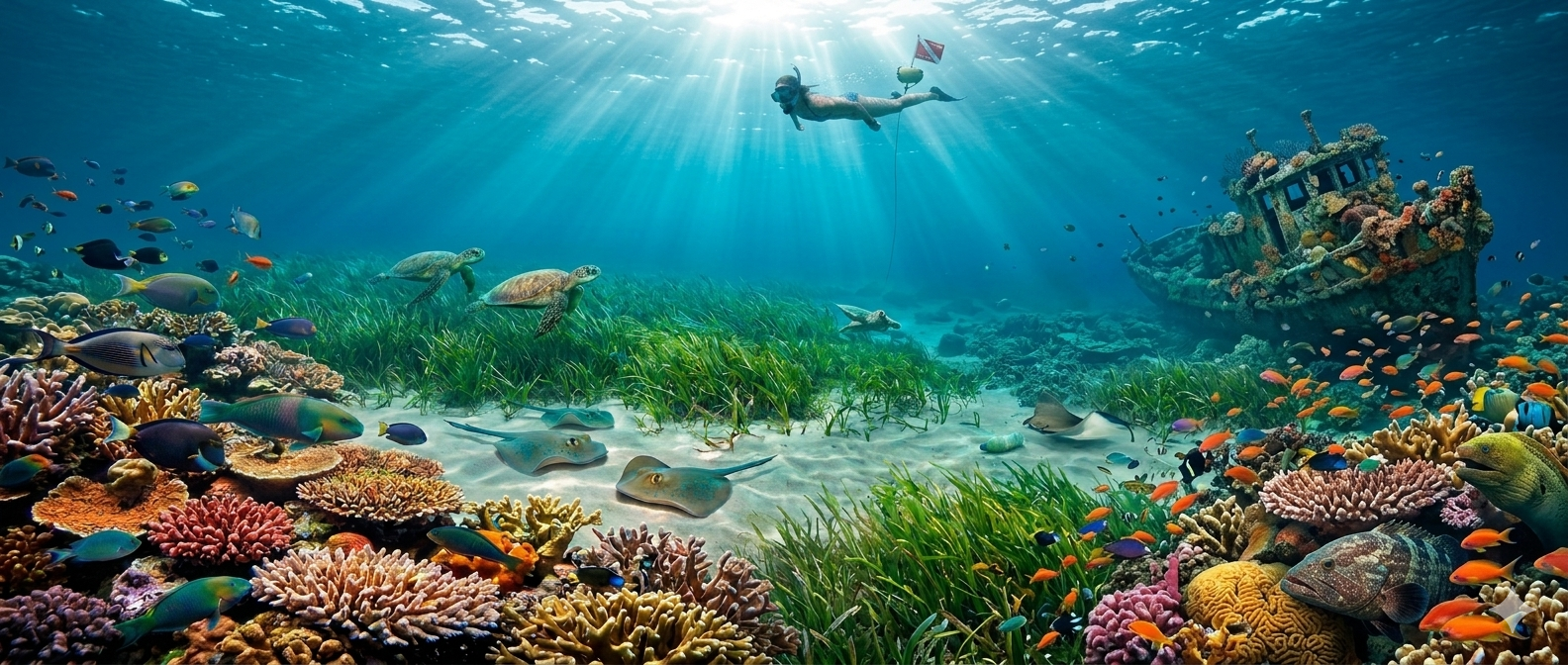
The Gulf of Mannar and Palk Bay form one of India’s most unique and ecologically important marine regions.
Located along the southeastern coastline of India near Rameswaram, these waters support a rich combination of coral reefs, seagrass meadows, shallow coastal habitats and diverse marine species.
The region plays a critical role in supporting marine biodiversity and coastal ecosystem balance.
A Region Of High Marine Biodiversity
The ecosystems of Palk Bay and the Gulf of Mannar provide habitat for:
reef fish
rays
turtles
seahorses
nudibranchs
crustaceans
cephalopods
coral communities
seagrass dependent species
These ecosystems support both resident and migratory marine life throughout the year.
The Importance Of Seagrass Ecosystems
Seagrass meadows are among the most important habitats in the region.
They provide:
nursery grounds for juvenile fish
shelter for marine organisms
feeding grounds for turtles and dugongs
sediment stabilization
coastal ecosystem support
Healthy seagrass ecosystems are essential for maintaining marine biodiversity in shallow coastal waters.
Coral Reefs & Coastal Habitats
Coral reef habitats within the Gulf of Mannar support complex underwater ecosystems filled with fish, invertebrates and reef associated marine life.
These reefs contribute to:
coastal biodiversity
habitat complexity
fish populations
underwater productivity
The region also contains shallow reef structures and sandy ecosystems that support species adapted to coastal conditions.
Why Documentation Matters
Despite their ecological importance, many underwater ecosystems in the region remain under represented in public marine documentation.
Marine Biosphere Lookout aims to encourage more visual documentation and community participation in exploring these ecosystems responsibly.
Building awareness through underwater observation and storytelling can help strengthen appreciation for the biodiversity of the Gulf of Mannar and Palk Bay.
Exploring Responsibly
Divers and ocean users can help protect these ecosystems by:
maintaining buoyancy control
avoiding contact with marine life
respecting seagrass habitats
reducing marine litter
documenting observations responsibly
The future of marine conservation depends on awareness, participation and long term stewardship of our oceans.