
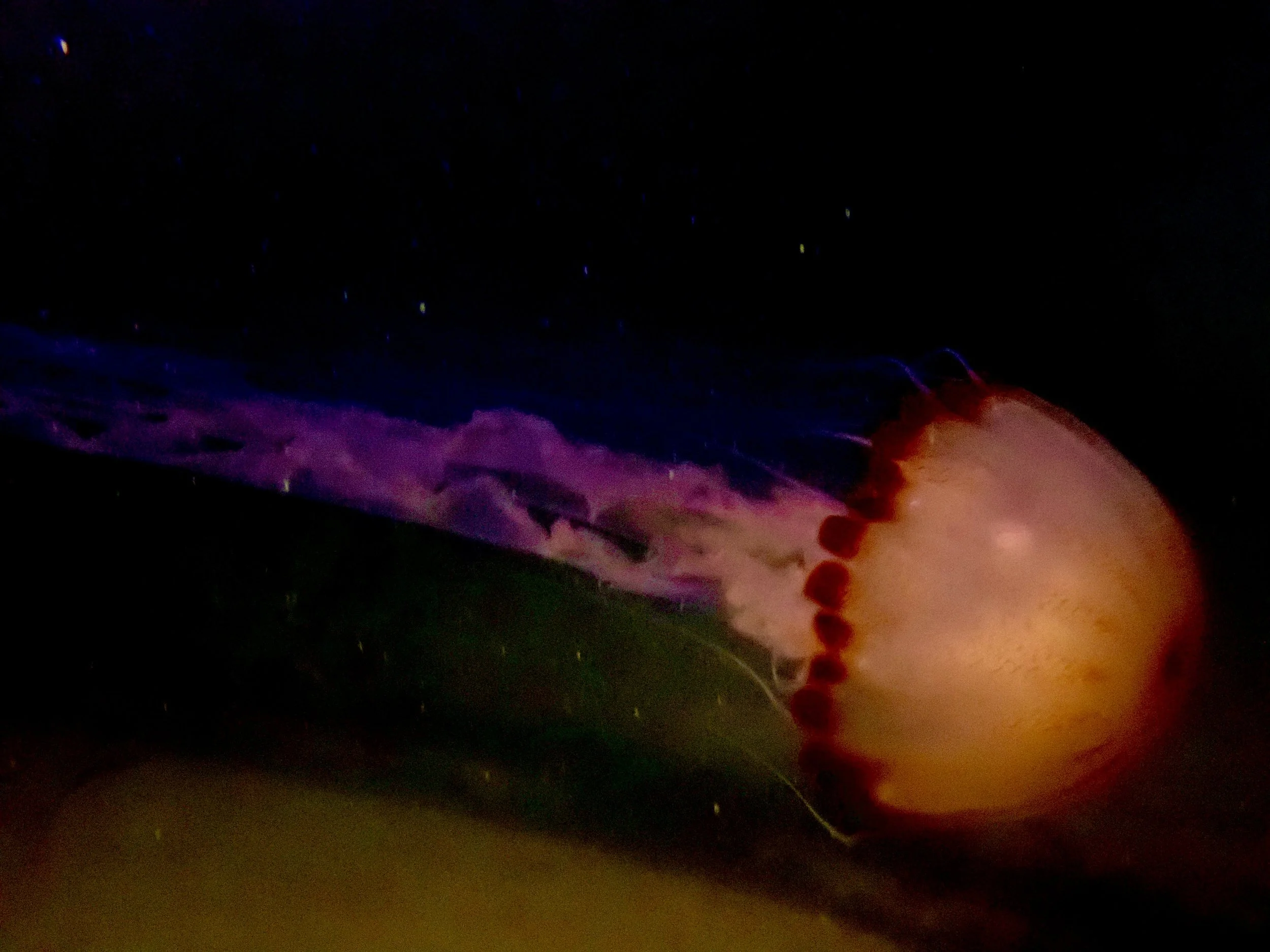
Sea Nettle Jellyfish Observed During a Night Dive in Olaikuda, Rameswaram
Marine Biosphere Lookout | Species Observation Archive
Marine Biosphere Lookout Record
Species Group: Sea Nettle Jellyfish (Tentative)
Family: Pelagiidae
Category: Pelagic Invertebrate
Location: Olaikuda, Rameswaram
Habitat: Open Water
Behaviour: Drifting / Feeding
Identification Confidence: Moderate
Observation Type: Night Dive Sighting
Region: Palk Bay – Rameswaram Coast
Observation Summary
During a night dive off Olaikuda, Rameswaram, a jellyfish tentatively identified as a Sea Nettle (Family Pelagiidae) was observed drifting through the water column.
Illuminated by dive lights, the translucent bell revealed a distinct reddish-brown margin while long trailing feeding structures extended behind the animal. Encounters such as this highlight the diversity of pelagic marine life that becomes visible after sunset in the coastal waters surrounding Rameswaram.
Unlike reef fish and benthic organisms that remain associated with specific habitats, jellyfish are carried by currents and often provide a snapshot of changing environmental conditions within the region.
Observation Details
Species Group: Sea Nettle Jellyfish (Tentative Identification)
Family: Pelagiidae
Location: Olaikuda, Rameswaram, Tamil Nadu, India
Habitat: Open Water
Dive Type: Night Dive
Behaviour Observed: Free Swimming / Drifting
Identification Confidence: Moderate
Observation Type: Pelagic Marine Life
About Sea Nettles
Sea Nettles belong to a group of true jellyfish known for their elegant bells, trailing tentacles and ability to capture plankton and small marine organisms using specialised stinging cells called nematocysts.
These jellyfish play an important role in marine food webs, acting both as predators and prey. Their abundance can fluctuate seasonally depending on water temperature, plankton availability, currents and weather patterns.
Although often associated with offshore environments, sea nettles are regularly encountered in productive coastal waters where food resources are abundant.
Night Diving Reveals a Different Ocean
As daylight fades, many marine organisms move into the water column to feed under the cover of darkness.
This nightly movement attracts a variety of pelagic species, including jellyfish, larval fish, squid and planktonic invertebrates. For divers, night dives offer a unique opportunity to witness marine life behaviours that remain hidden during the day.
Jellyfish are among the most spectacular of these encounters, appearing almost luminous when illuminated underwater.
Jellyfish in the Waters Around Rameswaram
The waters surrounding Rameswaram lie between the biologically rich ecosystems of Palk Bay and the Gulf of Mannar, two regions recognised for their marine biodiversity.
Seasonal jellyfish appearances are influenced by local currents, monsoon cycles and plankton productivity. Documenting these sightings helps build a better understanding of species occurrence and ecological changes within the region.
Observations of pelagic species are particularly valuable because they are less frequently recorded than reef-associated marine life.
Why This Observation Matters
Jellyfish are an important part of healthy marine ecosystems, yet they are often overlooked in biodiversity surveys.
Recording their presence contributes to long-term monitoring efforts and helps improve understanding of seasonal marine life patterns along the Tamil Nadu coast.
Every documented sighting adds another piece to the growing picture of marine biodiversity around Rameswaram and provides useful information for divers, researchers and conservationists alike.