
Camouflaged Octopus Observed at Golf Course Dive Site, Palk Bay
Marine Biosphere Lookout | Species Observation Archive
Marine Biosphere Lookout Record
Species Group: Octopus
Family: Octopodidae
Category: Cephalopod
Location: Golf Course Dive Site, Palk Bay
Habitat: Sandy Reef Bottom with Algae and Shell Debris
Behaviour: Camouflage / Resting
Identification Confidence: High
Observation Type: Night Dive Sighting
Region: Palk Bay, Tamil Nadu, India
Observation Summary
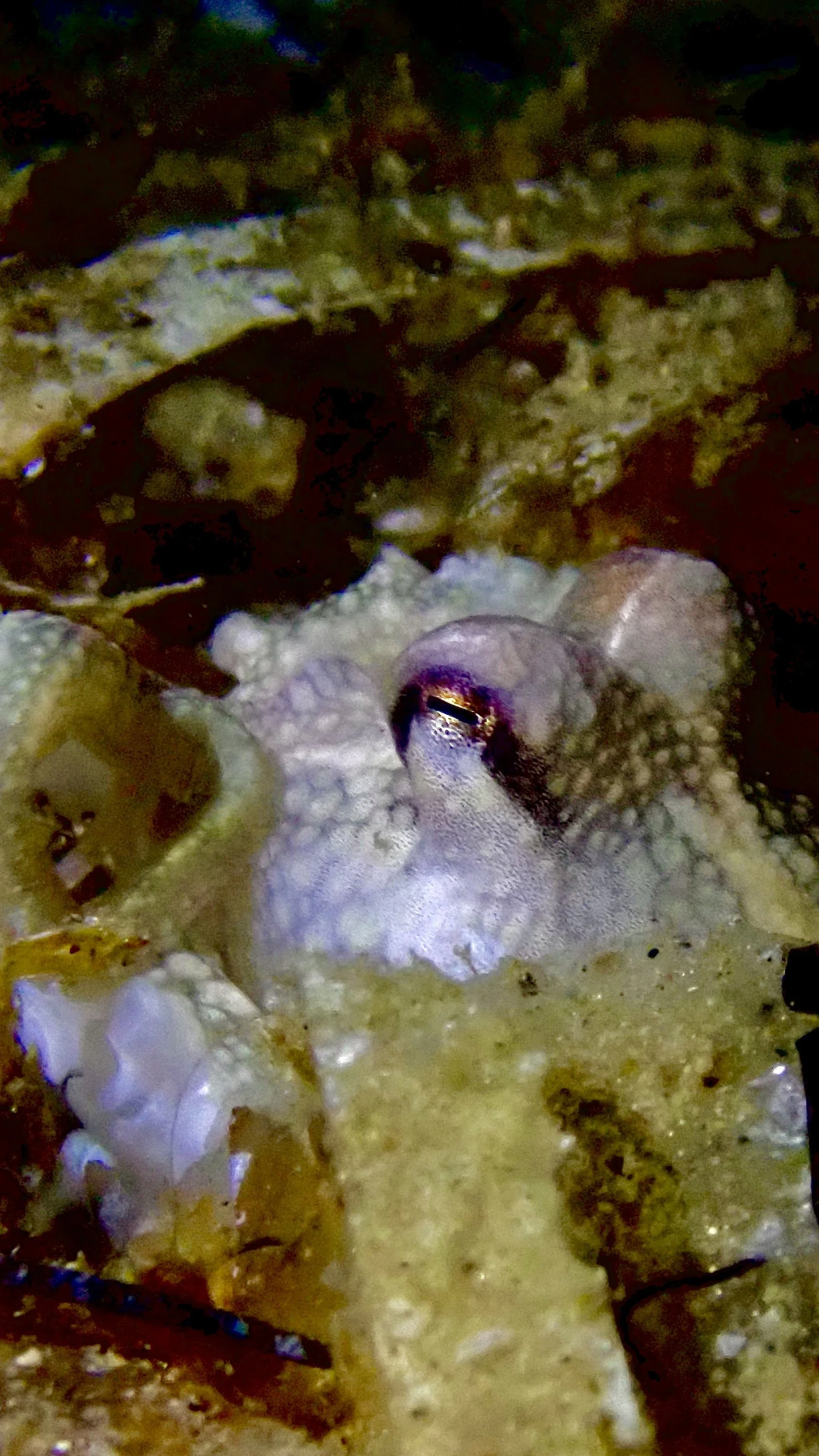
A well-camouflaged octopus was observed during a night dive at the Golf Course Dive Site in Palk Bay.
Resting among shell fragments, algae and reef debris, the octopus blended almost perfectly into its surroundings. Only its distinctive eye and subtle body outline revealed its presence.
Octopuses are among the most intelligent marine invertebrates and are famous for their ability to rapidly change colour, texture and body shape to avoid detection.
This observation demonstrates the remarkable camouflage strategies that make octopuses some of the most challenging animals to locate during underwater surveys.
Observation Details
Species Group: Octopus
Family: Octopodidae
Location: Golf Course Dive Site, Palk Bay, Tamil Nadu, India
Depth: Shallow Reef Habitat
Dive Type: Night Dive
Habitat: Mixed Sand, Shell and Algal Substrate
Behaviour Observed: Camouflage / Resting
Identification Confidence: High
A Master of Disguise
Octopuses possess specialised pigment cells called chromatophores that allow them to rapidly alter their appearance.
Within seconds they can:
Change colour
Modify skin texture
Create disruptive patterns
Blend with surrounding habitats
The individual observed at Golf Course Dive Site displayed exceptional camouflage, matching the colours and textures of the surrounding reef substrate.
Why Night Dives Reveal Octopus Activity
Many octopus species become more active after sunset.
Under the cover of darkness they emerge from shelter to hunt for:
Crabs
Shrimps
Small fish
Molluscs
Other invertebrates
Night dives provide a unique opportunity to observe these behaviours while minimising disturbance to the animal.
Octopuses in Palk Bay
The shallow reefs, artificial structures and seagrass-associated habitats of Palk Bay provide excellent habitat for octopuses.
These highly adaptable animals occupy crevices, discarded shells, artificial reef structures and rocky outcrops throughout the region.
Although frequently present, they are often overlooked due to their extraordinary camouflage abilities.
Why This Observation Matters
Octopuses are considered important indicators of healthy marine ecosystems.
As active predators, they help regulate populations of smaller invertebrates while serving as prey for larger marine animals.
Recording octopus sightings contributes to our understanding of species distribution, habitat use and the ecological value of reef habitats within Palk Bay.