
Glass Anemone Shrimp Found Living Among Sea Anemone Tentacles in Palk Bay
Marine Biosphere Lookout | Reef Species Archive
Observation Summary
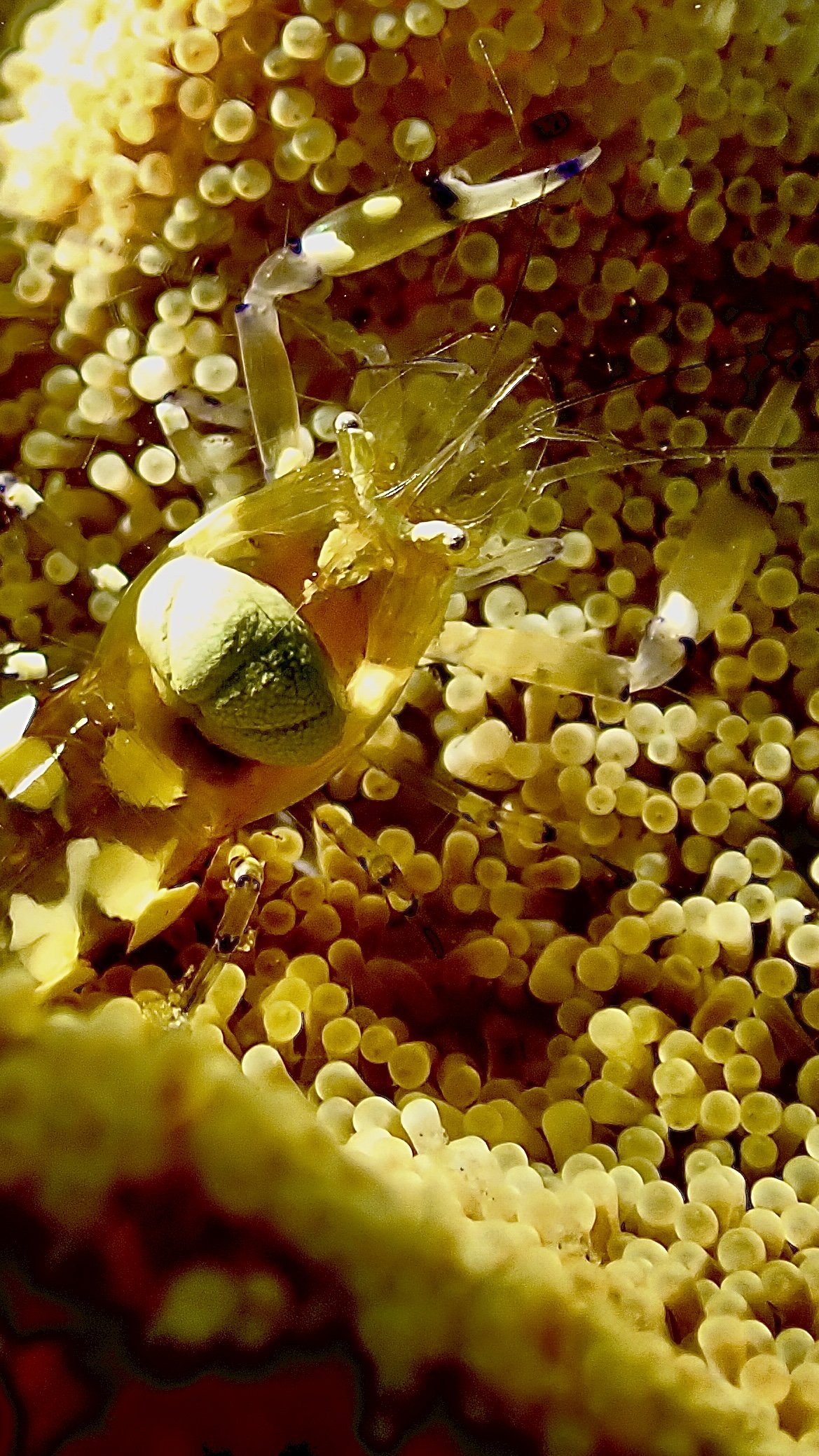
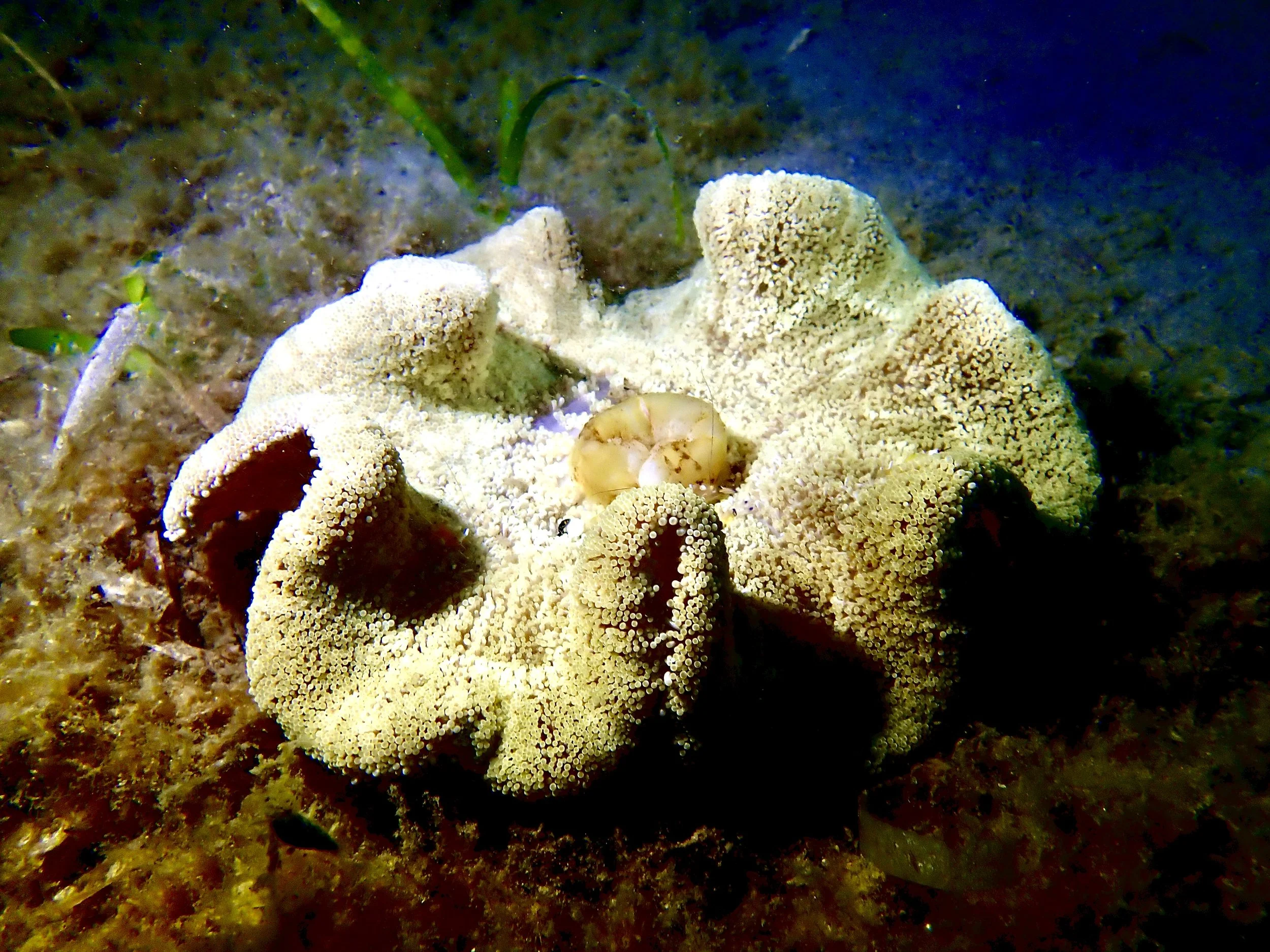
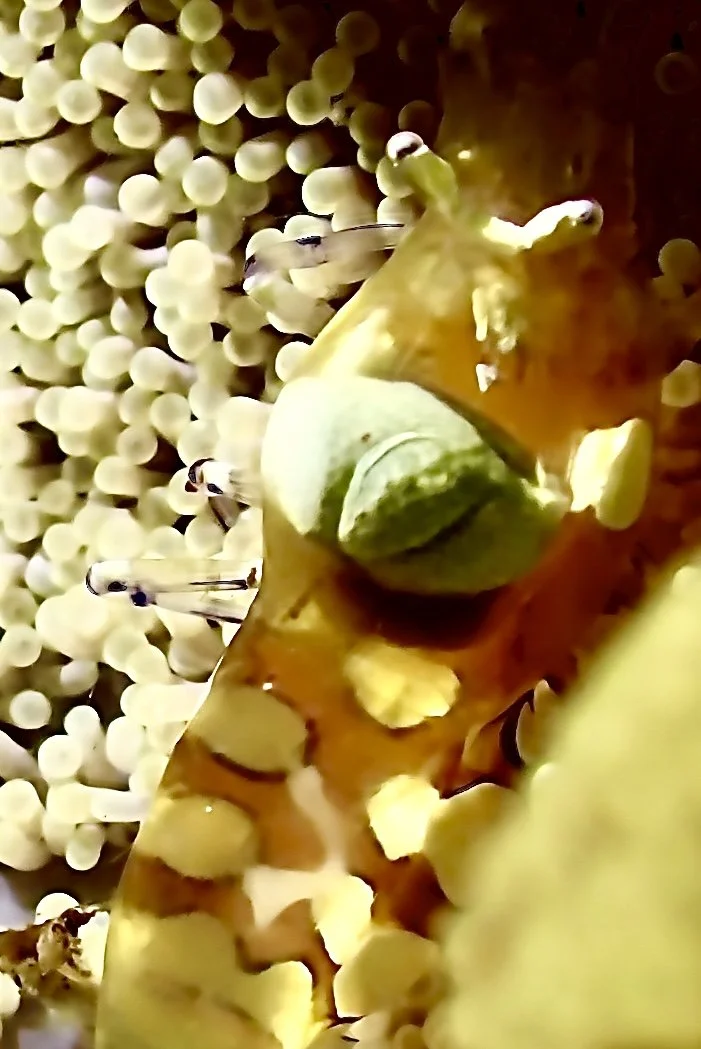
A Glass Anemone Shrimp (Periclimenes cf. brevicarpalis) was observed living within the tentacles of a host sea anemone during a dive in Palk Bay.
The shrimp remained almost invisible against the anemone due to its highly transparent body and subtle colouration. Only under close inspection were its distinctive white markings and blue-tipped appendages visible.
Several smaller individuals were also present within the same anemone, suggesting the habitat was being used as a refuge by multiple shrimps.
Marine Biosphere Lookout Record
Species: Glass Anemone Shrimp (Periclimenes cf. brevicarpalis)
Category: Crustacean
Habitat: Sea Anemone
Behaviour: Host Association
Identification Confidence: Moderate
Observation Type: Macro Marine Life
Region: Palk Bay, Tamil Nadu, India
Observation Details
Species: Glass Anemone Shrimp (Periclimenes cf. brevicarpalis)
Location: Palk Bay, Tamil Nadu, India
Habitat: Sea Anemone
Depth: Shallow Reef Habitat
Behaviour Observed: Shelter and Host Association
Observation Type: Macro Marine Life
Life Inside a Sea Anemone
Sea anemones are often recognised for their relationship with clownfish, but they also provide habitat for a variety of lesser-known marine species.
Anemone shrimps spend their lives among the tentacles of their host, where they gain protection from predators and access to food particles carried by ocean currents.
Their transparent bodies and intricate colour patterns are highly specialised adaptations that allow them to blend seamlessly into their surroundings.
For underwater photographers and macro enthusiasts, these shrimps represent one of the most rewarding discoveries hidden within reef ecosystems.
Symbiosis on the Reef
The relationship between anemones and their resident shrimps is an example of marine symbiosis.
The shrimp benefits from the shelter provided by the stinging tentacles, while the anemone may gain cleaning services and removal of trapped organic material from its surface.
These interactions demonstrate how even small reef habitats support complex ecological networks involving multiple species.
Why Small Species Matter
Reef ecosystems are often celebrated for colourful fish, turtles and larger marine animals, but much of their diversity exists at a much smaller scale.
Shrimps, crabs, nudibranchs and other invertebrates play important roles in nutrient cycling, cleaning relationships and food web dynamics.
Recording these organisms helps reveal the true complexity of reef habitats and highlights the importance of protecting the smaller species that are frequently overlooked.
Macro Diving in Palk Bay
The reefs and artificial structures of Palk Bay support a surprising variety of macro life.
Careful observation often reveals species that can easily be missed during a casual dive, including anemone shrimps, cleaner shrimps, nudibranchs, cryptic crabs and juvenile reef fish.
For photographers and marine life enthusiasts, these smaller subjects provide some of the most fascinating encounters beneath the surface.